Wednesday, July 26, 2006

Jean-Claude Van Halen
The scents of a murky narrative were lingering in the atmosphere; the haze of a cursed tale drifting and dispersing in rolling tableaus of past pain, past turmoil and pasta. The restaurant - a particularly upmarket hive of vanity just off Euphemism Boulevard - was soaping with the suds of Hollywood’s young elite and the dried residue of Hollywood’s washed-up. The former sat in business ritual attire, the air choking on Christian Dior and cell phones cybernetically enhancing verbal communiqués. The latter sat in drooping spines, weary fidgeting and idle stains sloganeering on blithesome shirts.

Amongst these secondary recesses, these fjords of the downtrodden and despondent, perched actor Jean-Claude Van Damme. Most of his body was shrouded in thick strips of bandage, from the base of his feet to the peak of his cranium. A diagonal collage of first-aid pride did dance all over his person, with only the occasional relenting gap. His eyes for one were unsheathed; as were his knuckles. He sat with the faxed draft of some film-industry whiz-kid’s scribbles on his lap, intermittently flexing strange contortions in his eyes.

Opposite him was seated his agent, vacuumed scalp and air-brushed face, with a look of sheer astonishment lashing his jowls. Mouth slit slightly in amazement, he motioned towards Van Damme. Upon catching sight of this, the Belgian feverishly roared, “What is this nonsense supposed to be? ‘Big return’ you said, ‘a grand renascent extol’ - whatever the hell that means - you said it would be guaranteed with this project. But to put it frankly, I’m not convinced.” With this he threw down the stapled cluster of paper, the front-page imprinted with the words: Bambi live action, draft screenplay.

The agent remained still, taking only a one-second respite to glare at the harlot rooted at the adjacent table who was clamorously orating on the merits of Fritz the Cat over Felix the Cat. “Well?” Van Damme pressed, “Do I not pay you enough? I’ve just come back from filming some cack in Estonia and this is all I get? A shite script that seems to be all high-speed car chases and heavy-artillery shootouts, and your silence. You know quite rightly that I’m trying to veer my career into more character-orientated cinema, the playground of the true thespian. You know I’m set to follow in the footsteps of Olivier and Welles.”

“Um,” the plucky undercurrent moving the agent along somewhat, “Mr Van Damme, I think we have more important issues right now than whether you may or may not take the main role in this new film. Like, look at you!” Van Damme peered down innocently for a moment. “What is with the mummy visage?” the agent continued, the restraints of meekness receding, “you look like an Osiris idiot!”

At this outright insolence, Van Damme arose and plunged his enwrapped fist into the centre of the table. Grabbing the collars of his confidant, and staring right through his pupils, Van Damme retched, “Listen, you don’t know the hell I’ve been through, the savage descents and visceral collapses penetrating my person over the last couple of weeks. The events that have lead to my current appearance have been nasty, and I now bear a massive burden…”

---

It had been almost a month since Jean-Claude Van Damme arrived in the Baltic outcropping of Estonia. The country had been chosen as the location for primary cinematography due to a flowing rhapsody of incentives ranging from cheap crews, suitably Russian-esque topography and a contiguous territory of brothels. The film was an as-yet-unnamed action feast starring our story’s perilous hero as an American ex-pat living in a neo-Soviet Union, whose wife is murdered and it is up to him to avenge her.

Despite the groundbreaking synopsis consorting around this film, Van Damme didn’t shake from front to rear over his role. In fact, he slinked around the prison of the production with the demeanour of a rundown janitor perpetually sanding vomit. The long carpools out to the rural set where brokered by the wraith of tense hush, where Van Damme would sit opposite his co-stars, head down, but well aware of their insidious ogles. He was alienated by his fame, with the steeples of the outsider being ridden all over his person as if harnessed by Camus himself.

Just as the miasma of despair was sinking to it’s lowest ebb, a breakthrough broke through. Following an extended day of shooting, a woesome Van Damme bobbled to his trailer, only to be met at his destination by a line-up of stuntmen and grips. They broadcast a pleasantness he had not yet seen, and invited him out to enjoy the cabarets of Estonian nightlife. Having no reason to negate this, and subtly desiring an end to his dejection, he assented, and off they travelled into the capital city Tallinn.

Several ale-holes were docked at, a multitude of Eastern European ladies espied upon, brawls narrowly averted, chugalugs chugged, banal anecdotes purged like diarrhoea, and backwashes of stomach reflux aching the oesophagus. All the regular activities of the lads out on the town. Feeling melancholic after a number of minor-key laments dedicated to Kickboxer in a local piano bar, Van Damme and his escorts ventured into an open-air fair bubbling with sugary corrosives and stilted former-bank managers. It was here the true motives of his comrades became apparent.

After a few orbits of the frightening locomotives, rotating wheeled monstrosities and triangulated ball games, the jobbing crewmen persuaded Van Damme to visit a mystic who was secluded in a squared tent laced with the tassels of a labyrinthine need to acquire new tassels. Drunken and soporific, he decided to appease their wishes, then with mind to succeed it with an evasive journey back to the hotel. Flitting the cobbles of curiosity, he wandered on into the tent, where he came across an antiquated seductress posed warbling cryptic charms. Feeling his presence, she beseeched him a sitting, and with an iniquitous smirk on her face, flashed a tattoo on her forearm of a nymph with spires anatomising her gentle facial features.

“Well,” said Van Damme knifing the silence, “are you going to tell me my future?” The haggard mystic looked at him. “No, I’m not that type of cliché.” Feeling slightly extraneous, Van Damme replied, “Why am I here then? What do you do?” The gaunt eyes of the mystic rolled and she spluttered, “I take monies for services rendered at first enigmatically harmless, then following gestation, erupt into full-blown afflictions.” An inebriated Van Damme fingered his crew-cut at this roundabout explanation. “Listen,” the mystic continued, “drink this fine beverage and say no more.” From the instillation of Estonian mores during his fleeting social flirtation, he knew not to examine liquor too stringently, so he grabbed the tumbler of shadowy liquid and sent it’s contents tumbling down into the abysms of his gullet.

Then a split curtain of darkness unified, and the narrative was propelled along a short ellipsis of time.

Jean-Claude Van Damme woke up in his hotel room the next morning, bile rusting his throat, and the centrifuge of his mind spinning backwards. An overflow from the lake of memory slowly made its way into his frontal lobe, and the temporary amnesia that hung over him began to dissipate. He recalled his cronies filling him with copious amounts of alcohol and then ditching him. But the events to follow remained in eclipse, mired in a cloud of black. In an attempt to ameliorate his memory, he jumped out of bed and skipped over to the divan. During this skip he noticed a perpendicular set of lines rashing his chest. Swollen red and looking like sleep-induced engraving, he decided to ignore it under the assumption that time’s great scythe would cleave it away. Hobbled by the divan, he also resolved to ignore last night’s remembered chaos, what with there being less than a fortnight till the final shots of photography, there was little need to erupt a ruckus.

Filming continued, and the crewmen returned to their stockpile of disdain, but the rash did not vanish. Within two days it had grown to encompass a large percentage of his chest. Also similar relations of this skin plague were taking up residence on his arms and legs. This was not the only peculiarity, for he was experiencing odd sounds in his head, and would even find himself saying streams of words inadvertently at random moments. Luckily his only tasks on the film were to punch and kick the antagonists, and because it was winter, he was apparelled most of the time in clothes that covered his embarrassing ailment.

One night he had a dream. He was sitting on a stool, surrounded by darkness, when suddenly the sun exploded overhead and he realised that he was on a stage in the middle of a massive horde of people, all shouting and screaming in his direction. But instead of absconding from the stage or resorting to the foetus position, he began to dazzle them with scissor-kicks and air-guitar histrionics. Gyrating under the spotlights, all fear and trepidation evaporated in an instant, and he was left to have the edification of the crowd roar fellate and cuddle him.

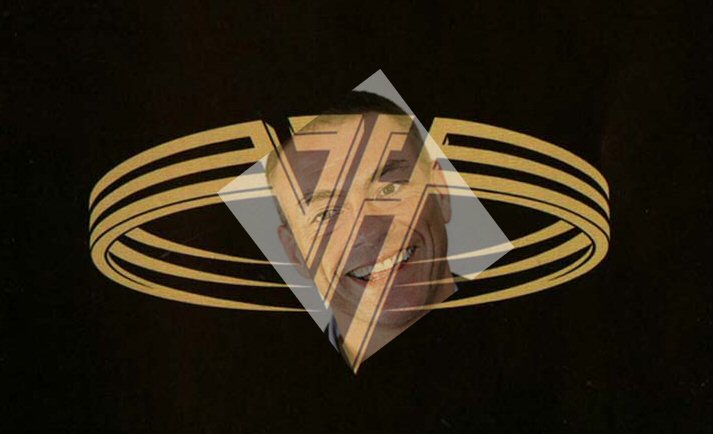
When his sleep fissured, he was at a loss to explain this dreamscape. Inspecting his skin malaise, he noticed a definite shaping evolving on his pectorals. The letters V and H were clearly visible, as well as some kind of wings sprouting out from behind the characters. He had also started to write down the random thoughts that recurred in his head. He now had a number of notes bearing ambiguous lines such as “I live my life like there’s no tomorrow,” and “Got it bad, got it bad, got it bad.”

“Indeed I do,” thought Van Damme humbly to himself.

To add another layer of insult to this odd injury, he would find himself playing air-guitar with any elongated shape he happened to pick up. The waitress was quite at a loss when she witnessed Van Damme executing a two-handed tapping solo on a baguette over breakfast.

Realising that something was desperately wrong - as he moved about covering random Kinks’ songs - he decided to demand an assortment of answers from his one-night friends. Clutching fists oozed in spite and repressing instinctual needs to start hollering A Minors, he confronted the miscreants, whose irksome mentalities were quickly ripped apart by force. A bloody-nosed Latvian emigrant, working as Best Boy, folded under the strains of Van Damme’s inquisition and spilled a puddle of truth. “Please don’t hit me again, I’ll tell you everything you want to know,” implored the Latvian, “We set you up to be cursed by a mystic at the fair. We paid her to enact the dreaded Van Halen hex on you.” This outlandish madness scraped itself across the countenance of Van Damme, who inquired further, “What does that mean?” “It means,” replied the maimed Latvian, “you are turning into the rock band Van Halen.”

With this revelation, Van Damme dropped the man and motioned to track down that blasphemous mystic - who now resurfaced in his memory - and demand she alleviates the curse.

Driving through the busy streets of Tallinn proved arduous as a likeness of David Lee Roth’s face was pimpling itself on his shoulder, while the metrical beats of Alex Van Halen echoed in his cerebellum. Eddie Van Halen’s ‘brown sound’ - which overlaid all his thoughts - was beginning to make him slightly nauseous, while Michael Anthony’s plaid pullovers were starting to act as visual filters for his eyes as the metropolitan sidewalks became drenched in tartan.

He halted his vehicular mobility outside of the fair and impelled his body into it’s interior. It was not long before he apprehended the mystic, and with a sly blow to the ear, he mailed her to the floor. “Remove this horrible curse right now!” bellowed an infuriated Van Damme. Ascending to her feet, she acquiesced and began concocting an antidote. Much of the rash had now climbed his neck and was now summiting on his head.

She drew a tumbler into his field of view, filled with a murky substance, and then said, “Drink this and the cure will naturally develop from your ill cells. But I have one warning for you, this remedy isn’t perfect, if you ever hear another Van Halen song, the scourge will return two-fold.” Van Damme drank the elixir.

---

“So I got a local doctor to bandage me up,” spoke a relaxed Van Damme in a restaurant just off Euphemism Boulevard, “and got on the first flight back here.” A scaffolding of awe had built up around the agent’s physiognomy, and he stuttered, “Wow, that’s some tale. Do you know how long you’ll be in this state?” Van Damme looked at him and said, “However long the organic processes take to complete their task. Don’t worry, I’ll be back to fighting shape in no time, just don’t be playing the music of those hard rockers near me anytime, alright?” “Sure,” replied the agent.

And just then, in a moment of misfortune that could only adorn a murky narrative or a cursed tale, the sweet aural melodies of 1984 began to stir in the background.

Monday, July 24, 2006

Green Carnation - Light of Day, Day of Darkness

My dalliances with the long song format began back in the day with Metallica’s Master of Puppets. Compositions scaling the extremities of the eight-minute mark proved quite a peculiarity to a young teenager nourished up to then on the likes of Aerosmith and Nirvana. The extended tentacles of ‘Orion’ ringed themselves around my ear drums; my auditory canal was corked by the riffarama of ‘Disposable Heroes’. The elongated double-stops of the title track smashed my head into the concrete at absolute disdain at a four-minute piece of naivety.

Then came Opeth, powering up the jigsaw of musical taste, epic musical creations clenched in teeth. Orchid and Morningrise both brought songs whose heads bobbed just above the rim of the ten-minute milestone. Then, of course, on the latter album came the brilliant opus of ‘Black Rose Immortal’, standing slouchless at twenty minutes and fourteen seconds.

Dream Theater tumbled out soon afterwards. The lengthy soundscapes of ‘A Change of Seasons’ and, more recently, ‘Octavarium’ bustling over the twenty minute benchmark, and succeeding to enthral and captivate with their excellence.

In 2001, out of the womb walked a composition to make those aforementioned tracks blush in submissive embarrassment, it went by the name of Light of Day, Day of Darkness.

Conceived, gestated and born of Norwegian metal band Green Carnation, this single-song album runs at a mammoth sixty minutes and six seconds, making it loom with grand enormity over it’s shorter cousins.

Despite that preamble into the ways of elongated metal, fanfare and superlatives, we are all perfectly aware that the length of things really matters not; the temporal format in fact coruscates with irrelevance. It’s what infests the waters of content that truly snatches at our concerns here.

Green Carnation is ostensibly a band leaning on the banisters of the progressive, yet each album has showcased something overtly different from the last. Light of Day, Day of Darkness is their second album, and probably the only one that can be labelled with the pigment of prog metal, first album Journey to the Centre of the Night being more of a doom-laden affair. While subsequent album Blessing in Disguise is more straight-forward metal, brandishing shorter arrangements and the habits of hard rock. Then there’s the further increment of traditional rock formats in 2005’s The Quiet Offspring, and the acoustic-based merits of The Acoustic Verses, released earlier this year.

But all that is surplus froth when contrasted with the magnificence of Light of Day, Day of Darkness. Oops, I’ve blundered into unveiling the reviewer’s best kept secret, the concluding verdict, the apotheosis of opinion. Well, let those strains of praise leap forth from my words, encircle the skyways, and perhaps even show-off a few dives south like a kingfisher.

The album/the song has been masterminded by band founder and leader Tchort, former four-string rogue for Emperor. Put simply, he has crafted an amazing piece of music, one that flows through different moods with ease, and is as epic in sound as it is in length. The music builds and cascades and folds and traverses through different sections, manoeuvring effortlessly from a riff-heavy verse to an airy symphonic interval. The album sleeve is adorned with a range of photographs - taken by Tchort himself - of Norwegian lakeside forest expanses, an assortment of beauty equalled by the music contained within, an appropriate graphic accompaniment.

Passages are returned to, cues seeded and revisited at a later moment; this really is a uniform composition. Too many long songs, or any-length songs, sound like nothing beyond a collection of disparate riffs - and sometimes this is fine. But Light of Day, Day of Darkness is one self-contained masterwork.

Complete with huge chugging, chunky guitar riffs, the album sounds massive. Definitely the ambrosia of studio miracles overhang this album, guitars layered like sediment from pre-Cambrian times, and a sublime mixing where every element seems to be at the forefront. Compared with the partial rendition on the DVD Live and Well…in Krakow, you can hear the mastery at work, the live version cursed as it is with an overloud lead guitar and diminutive rhythm section. Light of Day, Day of Darkness is a rhythm-based album, relatively simple riffs act as bricks in it’s bestial wall of sound.

One slight discrepancy is the ambient mid-section featuring the cackles of an aching female voice. While it may be suitable for the piece as a whole, it didn’t alight my aural subjectivity.

As already premeditated, the album is a breathtaking opus, from the introductory serene melodies, to the harmonious vocals, and from the strained emotions of the protracted guitar solo, to the final slabs of wonderful verse, it deserves to stand proud in showers of acclaim. And hark! Lead it to that apex, and then go forth with odes in the heart for Tchort and company, resonating to every passer-by the good melodious news of Light of Day, Day of Darkness.

Omega Doom

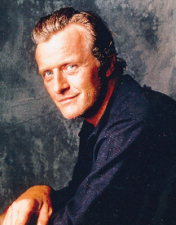
As I wormed myself forward into a subconscious delirium the night before last, I found myself striding in a dreamscape featuring Rutger Hauer. But this was not one of those nightmare visions full of obsidian and sulphur, fluctuating angles and amassed infants brandishing the face of Lance Henriksen, barrelled demons singing the praises of Ted Danson’s nausea-combusting Loch Ness. Nor was it the sort of sleazy grime-packed vitiation best found copulating in one of Burroughs’ westerns.

No, this was an anachronism stencilled with the ink of heretofore antiquity. For not only did the midnight express of illusion ride the rails of Rutger Hauer, not only did his skull-fibre provide a shroud for the night-sky itself, but, harking back to ancient China, I actually was Rutger Hauer.

There was a philosopher who used to ponder the imponderable back in the days of ancient China, back before people started to stroke their chins to the tune of anno Domini, and even before they started reruns of Knight Rider. He went by the name of Chuang Tzu. One night Chuang Tzu had a dream where he was a butterfly, and then upon awakening knew not whether he was a man who dreamt he was a butterfly, or a butterfly who was now dreaming he was a man.

This philosophical paradox, this cerebral conundrum, is how I now view my venture into the night-clad reverie of evenings hitherto. I was Rutger Hauer; even now through the nebulous gaze of reminiscence I can accurately visual the details. The unusual perspectives, the strange linear dimensions, the skewed revival of bygone particularities, all unwashed by the eroding liquid of being awake. Could it be true that I am indeed Rutger Hauer asleep, dreaming he is a Gen X-wannabe with too much time on his hands?

This mental preoccupation is not only laced with implausibilities along the magnitude of space, but is also gilded with the membranes of time. My bodily transposition did not take me to the Hauer of today, where he scampers about starring in schlocky science-fiction and shoddy horror. It took me to the Hauer of 1997, where he scampered about starring in schlocky science-fiction and shoddy horror.

With the mist of dream-amnesia dispersing, allow me to recount the turbulence suffered in my dream.

I was on the set of the film Omega Doom, standing opposite an intern for Fangoria, an inexperienced twitch-athon gawking the sclera off the shells of my eyes. A few passive words later and I was off to film the apogean scene, the climax of a few weeks worth of fun, games and other idioms out on location in Eastern Europe. This apex of the narrative has me battle a female reject from The Matrix. Leather carapace and Ray Bans, she antedates the heavy black and combat verisimilitude of Neo and co by two years. And despite being a homicidal android, there’s a certain air of the amorous about her.

The scene is, I am resurrected following a temporary decommissioning care of the nasty animatronic siren. I then proceed to destroy her, save the heroine and take leave to the barren planes of dirt, grit and sand. It was then, in some cheeky stomp of synchronicity, that ‘cut’ was yelled and I woke up.

Many questions were left sans answers. Gaping chasms of plot-holes. Fissures the size of Kentucky in massive fits of yawning.

A die-cast need to know took me to the Sci-Fi Channel that next day, where as luck would have it Omega Doom was set to be broadcast.

Seems Hauer’s reappearance on the plane of life wasn’t quite the Lazarus moment I had preconceived. Hauer plays Omega Doom, a robot on an Earth shaken with the frost of nuclear winter. Turns out these robots only data process evil. They took over the planet and caused the last crumbs of humanity to skulk into hiding. But Omega is different - due to a rogue bullet in the cranium, his evil circuits have become defective, resulting in only the nicest of nice thoughts to reverberate in his wiring.

Walking the arid land like Cain or Patrick Swayze, he eventually comes upon a small derelict town where two factions of robots are having a mini-civil war over a cache of weapons that may or may not be lying around in the vicinity. What with all those phantasms of bunnies, laughing babies, and other clichés of cuteness rebounding off his CPUs, he can’t help but eliminate the ne’er-do-wells and foist a flaming fist of peace on the community.

He does this. And all while skipping around the place all like a Russian stereotype wearing something akin to an Ushanka - a Russian fur hat. Reasons for this never amble this direction throughout the film, so I’ll assume that rowdy frat boys on vacation nearby amalgamated Hauer’s shampoo with green hair-dye, causing a most psychedelic outbreak of verdant dementia. Thus we have him attiring his head so as to not distract too much from the cinematography and screenplay.

Shoulda let him go hatless.

I never thought I’d say this about a Rutger Hauer film, but since we now seem to possess some sort of psychic link, I feel it’d be a disservice to not make my chagrin known. The debasing of my senses arises from a terrible story, ramshackle acting, tedious pacing, lousy effects, imbecilic dialogue and banal photography. At least half of that cavalcade of negation can be redeemed with the presence of Hauer, but alas too much goes on while he’s out soaping himself in the hotel Jacuzzi.

So does that mean that nothing has been learned to assist in my philosophical predicament? Why not commute my mind to the rancid joy of The Hitcher, or the soiled excitement of Night Hawks? Well no, Omega Doom is integral. Explicit is the reasoning for the seemingly arbitrary dream-travel in which I participated.

Rutger Hauer is Omega, he is the end, the finale, the conclusion and resolution and retribution all in one. The corollary of this is that I am Alpha, the beginning, the initial. But my part is superfluous except for providing something for Rutger Hauer to consummate; all I have done is flicker a seed or two, whilst he forms and moulds it all into a zenith of a close.

Despite this, at least for the time being, one inquiry fails to be gratified. Am I he dreaming me, or am I me dreaming he?

Saturday, July 22, 2006

Spring, Summer, Fall, Winter...and Spring

Imagine a cessation of all the tumult associated with western urban society. A dissipation of the technological and mechanised pandemonium that copulates with our aural senses relentlessly everyday. A levelling out of the frequencies discharged by any number of PDAs, UMDs or GPSs. The virus of rambunctious adolescents running around the suburbs brandishing toy guns and enacting assassination on any nonchalant passer-by remedied by silence. The fabric of quiet asphyxiating the hubbub of vehicular extravagance. An establishment of placidity, accented only with the murmurs of the serene.

Add to this some of the most beautiful scenery South Korea has to offer, and you have the setting for Ki-duk Kim’s film Spring, Summer, Fall, Winter…and Spring.

The film is painted on a canvas of luscious woodland greens and spellbinding acute-angled valleys. Most of the narrative takes place on a wooden hermitage floating atop a lake in a location brimming with rurality. This picturesque stage will steal your breath, with its still waters, rocky outcroppings and verdant flanks of foliage. It’s an amazing backdrop of tranquillity, and suits the story to perfection.

The life of a monk dwells at the crux of this film. The plot is subdivided into a quintet, each one following the flow of seasons laid out by the title. Each change of season is met with a progression in the temporal world, a jump forward, while at the same time showcasing the variance of each seasonal period.

Spring ignites proceedings as we are given the reins of apprehension and the plot is instilled. We meet an old monk living on the floating habitat, training up the mind of a youthful infant in the ways of Buddhist belief. It’s a life of meditation; one where desire is cast off into the flames of rejection, one where enlightenment jams with halcyon in the garage of peace. Our young apprentice has yet to achieve such high metaphysical triumphs, for he takes more pleasure in the torture of defenceless animals than the torture of material want. He scuttles and chuckles as he ties heavy rocks around the bodies of a fish, a frog and a snake, and observes as their movements are inhibited by this affliction, like Sisyphus condemned to life in a pond. This brattish behaviour is witnessed by the wise, old master, who sentences him to bear the burden of a large stone tied around his waist until he finds and emancipates those he harmed. An important lesson learned.

Summer has the youth become that bit less youthful, now standing as a young adult - at a guess, around twenty years of age. His world of simple calm becomes uprooted as his master and he welcomes into the lake-bound abode a young lady suffering some undeclared ailment. Of course, being the age that he is at, his hormones are rampaging over all the tenets of common sense, not to mention the doctrinal teachings of Buddhism. Eventually the throb of lust overwhelms him, and he and she partake in some naturalistic coitus out by a local waterfall. By the power of passion, this carnality and it’s subsequent repetitions, cure the comely female, and therefore she must go. This doesn’t provide good tidings to the infatuation of our protagonist, who, in a juvenile sulk, runs off with her, much to the chagrin of his master. A master, incidentally, with some of the best disdainful looks this side of Willem Dafoe.

Fall - a term vastly superior term to Autumn - opens with the master playing with some artistic expression or other, when he notices on a slice of newspaper the news of some thirty-year-old killing his wife and disappearing. It takes little intuition to know that this murderer is the protégé, gone stray into the abyss of ownership, and jealousy, and all the various diseases of the intellect us constituents of modern civilisation are used to.

He eventually shows up at his spiritual home, sporting silly overgrown hair and trendy goatee. Here he mopes and pouts, resentment perspiring from corrupted pores. But, tired of his immature demeanour, he is bestowed a purification chore by the master - a task of cutting out Korean characters from the wooden deck using the small knife he utilised in his homicide. During this, a duo of law enforcement arrives to carry him off, their mobile phones and barbarous guns contrasting greatly with the peaceful nature of this isolated life. Expressing a niceness short of the preconceived savagery, they allow for the cleansing and purging to be completed before shipping him off to some penitentiary far away. The section ends with the dying master self-immolating on a boat in the middle of the lake to the tones of sorrow and melancholy.

Against the icy breezes of winter, a now-older and more relaxed monk - transmogrified into master by default - arrives back at the lake. A body of water frozen over by the glacial frenzies of the season, providing some of the most spectacular visual pleasures for the eye in the entire film. After a short while pickaxing parts of the frosted landscape, a mysterious lady arrives with her baby. Obviously tormented in some way, she keeps her entire head covered with a sheath without abate.

Following a hasty and unpremeditated exit, she falls into a night-concealed porthole in the ice, leaving her child to the auspices of the monk.

Spring - the second spring that is, the full circle conformed - is a reflection of the beginning segment, with the monk now confident master, and the infant his spiritual protégé. We are shown the child messing, with youthful viciousness, with a small turtle that happens to traverse the deck of the domicile.

And so the serpent of Ouroboros is appeased, cyclicity instated into a poetic visual display. The tide of seasons reflecting the similar stirs and shifts of human existence itself. And therein lies the inherent beauty of the film, a self-contained microcosm, and an end that is as much a beginning as it’s definition regales us. The cinematography and soundtrack only lend themselves as positives in the creation of this brilliant piece of cinema.

The location is similar to the lakeside expanses of The Isle, but Spring, Summer, Fall, Winter…and Spring has all the restraint and beatification that it lacks. The pacing and amount of dialogue may be similar to 3-Iron, but this is infinitely more captivating. Ki-duk Kim has produced a masterpiece with this film, which is both contemplative and blissful, and takes the idea of film as a pure art form that bit closer to perfection.

Thursday, July 20, 2006

Spastic Ink - Ink Compatible

With all compassion mired in the haze of a sinister technocracy, a noir is stipulated. A malign system, shadowed by despair, silhouetted by menace, reaching out and suffocating its encased proletariat. Providing a matte environment, chiselled by insulated wire, an electronic hum swarms and ingests all shades of liberty. The coils of mass production and the insensate scatter down like rain showers, osmotically instilling the mild strains of oppression into the individual psyche.

Such is the effect enkindled by the synthetic atonalities that introduce the predominant theme of Ink Compatible. The birth-whispers of a modem leak from the speakers, waltzing to the artificial hues of information technology. Scenes are set, moods are configured, effectuations are distilled, and balls are mobilised into the movement stance. This is the negated aura spun outward in a perpetual web, ensnaring all those bred with the temptation to motion towards that trite idea of ‘a closer look.’

Ink Compatible is the second album by Spastic Ink, a progressive metal band of US nascence, led by all-round genius and guitar virtuoso Ron Jarzombek. In fact it would be just to label this a solo-project, as Jarzombek, along with possessing a really cool surname, writes and orchestrates all the music. Ink Compatible is the 2004 follow-up to debut Ink Complete, released in 1997. The differences between the two are overt and obvious. The debut proves to be a rather simplistic and lacklustre affair, with a tiny production and plain arrangements. But despite this, the potential for something far beyond it’s limits are noticeable, especially in songs such as the brilliant ‘To Counter and Groove in E Minor’, a song so pleasing to the ears as to almost redeem the tedium of the majority of the album.

Luckily Ink Compatible avoids the chasms it’s predecessor stumbled into. This album sounds huge; given the grand production job, it has depth and reverberates long into the abyss. It sounds like a professional recording, whereas the previous release sounded bare-bones and stripped-down.

The music, as is the reason why we’re here, is led by the guitar shred of Jarzombek. For those familiar with his fabulous tech-thrash band Watchtower and their two albums, it won’t come as a surprising wallop to learn that things here flow in a torrent of technical intricacies. With his homemade guitar in the classical position, Jarzombek imprints the proof of his wizardry and instrumental efficacy, and demonstrates that he is not only one of the best players in the metal arena, but that he is also one of the most creative and inventive players.

The tracks on here don’t just gallop through one virtuosic hoop after another. No, they demand attention, and capture it in a trap of prodigious and original compositions. Bit like a mousetrap, only with more scales.

The soundscape here makes use of odd-meters and a rapid oscillation of time signatures. Things are insanely technical, and with relentless intensity it is shot forward with nary a moment for reflection. This isn’t your usual neoclassical guitar-based album, Ink Compatible manoeuvres along more like a shredding Mr Bungle, including maintaining the comedic elements of that eccentric band. Songs like ‘Words for Nerds’ and ‘Melissa’s Friend’ are punctuated with soundclips of an assumed technophobe’s quandaries in using computer technology. There are also audio interpolations of what can only be described as a Dickensian nightmare involving the purchase of a computer - a sweet, young English accent requesting a number of technophile ideals, but the whole scene slicked with a disconcertingly subtle air of uneasiness. The penultimate track includes a wonderfully uncomfortable spoken section; suitably enigmatic words breathed by a creepy female voice. Interestingly enough, the album sleeve informs us that this mysterious voice is none other than that of Jarzombek’s wife, Jennifer.

The main theme here gravitates out from notions of using personal technology, seemingly inspired by Jarzombek’s own experiences at the interface of some operating system, or his own philosophical contemplations orbiting the enumeration of transistors and resistors. All this with a rather dark tint; airs of alluring devices, but ones not to be trusted. But at the same time overtones of humour infest the proceedings.

Most of the songs are propelled along by the drumming of Bobby Jarzombek, brother and former-Watchtower band-mate of Ron. His exquisite percussion work lays a foundation for the overlapping layers of guitar, and are of such complexity that one could quite happily listen to the whole album, only giving due attention the drums, and still be enthralled.

The guitar frenzies are akin to Buckethead, only less maniacal, but more listenable. Fifth track, ‘Read Me’, begins like a deranged Bach as Jarzombek sprints through a plethora of scalar shapes, whilst the ten-minute-plus mouthful of a track, ‘A Chaotic Realization of Nothing Yet Misunderstood’, includes some crushingly claustrophobic time signature disorder towards it’s climax. The highpoint of the album for me is the start-stop brilliance of the verses in second track ‘Just a Little Bit’; with almost random occurrence, a combination of heavy power-chords and bass-drum intimidation shake the senses.

Of notable note are the guest appearances of Daniel Gildenlow - the Pain of Salvation mastermind - and Marty Friedman - former-Megadeth guitar god. Gildenlow adds his smoothing vocal melodies to one track, whilst Friedman contributes his distinct solo tone to an excellent trade-off with Jarzombek on another one.

Ink Compatible will not satisfy those music consumers seeking an identifiable hook, or some conventional verse-chorus-verse-chorus monotony. This is a shred album, but one that stomps all over the swollen fingers of Yngwie Malmsteen, or the spindly fingers of Steve Vai, or the bluesy fingers of Joe Satriani. May it be carved in granite the truth that Ron Jarzombek is a fret-deity of as much worth as that aforementioned trio, that he is a musicological genius, and that Ink Compatible is a befitting showcase of his majesty.

Wednesday, July 19, 2006

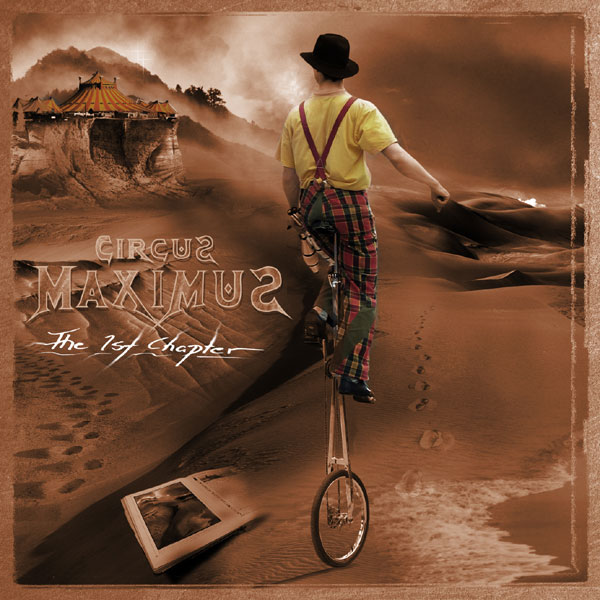
Circus Maximus - The 1st Chapter

It was a hot summer’s night and an allegory was trundling along the cerebral pathways, skipping over the lost analogies of yesterday. From its home in the mind rafters, it spun into free fall and hit terminal velocity almost instantly. Within seconds it was presiding over the sensuous caresses and intimate touchings of a late-eve bedroom scene. There under a silken sea of bedding, was an anthropomorphic Dream Theater indulging in coitus with a physical manifestation of Symphony X. Their writhings went on long into the morning like a tacky romantic novel ripped from the shelves of a chain supermarket.

Fast forward in a dissolve about nine or so months, and the sexing couple are now having their progeny exorcised via a crimson-coated caesarean. With umbilicals slashed and King Crimson records under arm, that offspring stands proud and independent of its parentage. That child was dubbed Circus Maximus.

Circus Maximus are a Norwegian ensemble playing progressive metal; and whilst their influences are easily noticed, it’d be unjust to wield the dirty claw of derivation in their direction. Cues are gathered up and lovingly cradled from their two most pronounced influences; musical cues archived and held close to one’s chest. But despite this, the airs of originality descend nevertheless - due to the excellence of the music composed. The form may not drip with ingenuity, but the content provides all that a fan of such genre music would request, while at the same time not wishing an escape to that old copy of Images and Words.

The 1st Chapter is Circus Maximus’ debut album, laid down in audio petrification in 2005, and distributed to the masses later that year. The recording consists of eight tracks, along with a bonus track dependent on your geographical location. But where is this regurgitation of facts leading us?

It leads us down an alleyway marked ‘concision’; a place where the pithy dominate with closed fists of succinct pummellings; oppressing the proletariat who can only say things in the most roundabout way possible, the architects of circumlocution. For the necessity is for me to outwardly express my own inner subjectivity in a vomit of opinions. And this is it.

The album is a fantastic collection of songs. Songs, now there’s a word worthy of deeper contemplation. Songs in the traditional sense; pieces of music you’d label catchy, pieces of music you might even sing along to. The 1st Chapter has them pushing their way out of the jewel case. But alongside these songs are the required oodles of instrumental technicality, all exercised with taste and restraint. Put simply, it’s an excellent combination of the two facets, and an undertaking not easily pulled off. This coalescence reminds me of their fellow-countrymen, the sublime Pagan’s Mind, another band able to showcase dynamic and exhilarating technical prowess, but also having proper songs that’ll remain in the head post-listen.

The 1st Chapter gifts us a varied collection of music here - within the macrocosm of the album as a whole, but also inside that microcosm of individual songs. Of course, the tendency to shift mood and style mid-song is an underlined principle in the prog recipe, and there’s few steps taken away from that here. Not to intimate that as a negative thing, I think it’s one of the defining aspects of the genre, one that undoubtedly appeals to its listeners. Well, me anyway.

The album opens with a heavy chunk of dissonance with ‘Sin’, an intro citing the patriarchy of Symphony X, but also the 7-string bludgeons of Nevermore. Things proceed into palm-muted chuggathon verses, then into big rock choruses. Track six, ‘The Prophecy’, has not only a title that wouldn’t look amiss on the sleeve of a Symphony X album, but the intro has the sort of thickness that’d bring a tear to the eyes of Michael Romeo himself. ‘Alive’ is a melodic and symphonic ode that speaks more of early Dream Theater, and it becomes clear here why vocalist Michael Eriksen is credited with vocal AND harmony vocals. His oral harmonies add another ingredient to this musical sandwich, and may even find themselves circulating your cerebellum when in the shower (as is the trite thing to do).

‘Biosfear’, neglecting the rather silly wordplay, is a tour de force of instrumental wonder. The only instrumental track on the album, it gestures more than once towards the riffs of John Petrucci. It seems to draw on some of the extravagant musicological noodling of the first ‘Metropolis’, or the Scenes from a Memory beast, ‘The Dance of Eternity’. Some of the keyboard patches used here are especially akin to Kevin Moore’s, and later Jordan Rudess’, tinklings. The song comes to a head at the end in a cataclysm of flowing intensity, with some wonderful orchestral keyboard accents backing an intricate display of guitar virtuosity.

The notion of variation once again irrupts, and we see fifth track ‘Silence from Angels Above’, an acoustic and reflective ballad. Melodious and beautiful, this track is able to maintain interest amongst the surrounding cacophony. ‘Glory of the Empire’ was the first song to thieve my attention, with its gloriously upbeat verses and vocals reminding one of some of Geoff Tate’s more optimistic moments.

The centrepiece of the album is the title track, a near-twenty-minute opus that oscillates between inspirational verse and instrumental breakdown with ease. Its lengthy condition is quickly circumvented by the simplicity of an interesting aural environment, rarely have I seen such an elongated song going by so hastily.

In the end, it was a good birth. One to be celebrated with joyous balloons inked with Rick Wakeman’s fingers, party poppers that erupt miniature rushes of Alex Lifeson, and maybe even Russian dolls etched with the smirking grimace of Phil Collins when he was still incarcerated behind a drum-kit. The 1st Chapter is a fantastic album; Circus Maximus are a credit to its parents. Here’s looking forward to their sophomore album.

Tuesday, July 18, 2006

Update

As you can quite rightly see, Generic Mugwump has gone through a slight aesthetic update; things are now just that little bit less generic.

And also, there is now an index post, allowing for easy access to all scribbles, old and new.

Generic Mugwump Index

A list of all the nonsense on here (bad grammar included).

Film Reviews
964 Pinocchio
Absolon
Absolute Zero
Actiongirls: Soldiers of the Dead - Part 1
Against the Dark
Alphaville
American Ninja
And Now the Screaming Starts
Assault on Dome 4
AWOL (aka Lionheart)
The Beast Must Die
Best Seller
Black Moon
Black Sheep
The Body Stealers
Cobra
Corpses
The Dark Wind
Dementia 13
Doomsday
Double Dragon
The Eden Formula
The First Power
The Fly (1986)
Haunted House of Horror
I Come In Peace (aka Dark Angel)
In Hell
Johnny 2.0
Judge Dredd
Kickboxer
The Killer Shrews
Living & Dying
Masters of the Universe
Mazes and Monsters
The Mechanik (aka The Russian Specialist)
My Name is Bruce
The Neighbour #13
Night of the Lepus
Omega Doom
Out For Justice
Rambo 2
Rambo 3
Renegade Justice (aka Urban Justice)
Revelation
Safe
Scorpius Gigantus
Shock
Son in Law
Sour Grapes
Split Second
Spring, Summer, Fall, Winter...and Spring
Steel Dawn
Street Fighter
Submerged
Surviving the Game
Three Days of the Condor
Tornado!
The Underground
Until Death
The War Game
Zizek!

Music Reviews
Aaron McMullan - 75mg
Arch Enemy - Rise of the Tyrant
Cavalera Conspiracy - Inflikted
Circus Maximus - The 1st Chapter
Dark Angel - Darkness Descends
Demiricous - One
Doctrinal Expletives: The Lyrical Testimony of Carcass
Dream Theater - Octavarium
Dream Theater - Systematic Chaos
Dream Theater - When Day and Dream Unite & When Day and Dream Reunite
Green Carnation - Light of Day, Day of Darkness
In Flames - The Jester Race
John Petrucci - Suspended Animation
Michael E. Thomas - Live
Nevermore - This Godless Endeavour
New Year’s Eve featuring Nes Advantage, Tsug, etc - Live
Opeth - Camden Roundhouse - 9th Nov 2006
Opeth - The Roundhouse Tapes DVD
Spastic Ink - Ink Compatible
Symphony X - The Divine Wings of Tragedy
Vanishing Point - The Fourth Season

Book Reviews
Agitator - The Cinema of Takashi Miike
Kurt Vonnegut - Breakfast of Champions
Paul Bowles - The Sheltering Sky
Vern - Seagalogy
Warren Ellis & Chris Sprouse - Ocean

Essays
Cinematic Mullets
Commentary on the appearance of Stallone on the cover of The Guardian
Docklands Light Rumination
Drawn and Faheyed
Fragments of Fahey
Fuck Chuck Norris - A Polemic
The House That Fahey Built
I am the Law: Postscript to Sly Sly Stallonify
Iceland Iconography
Irony of Ironing: A Treatise on the Ramifications of Cinematic Ironing
James Woods, London

Jeff Fahey: A Prospective Glance
Jeff Fahey as Cultural Icon
The Keaton Blues
Lamentation for a Generation
Let Battle Commence
Music as Opposition: Akercocke's Voyage into Northern Ireland
Mugwump
One-Dimensional Man - Starring Gary Busey
Proposal for a Steven Seagal Musical

The Remake Rant
The SANT Manifesto
A Statement on Scientology
Steven Seagal Turns Orange
Suggestions for a Transcultural Narrative: When Beckett and Fonzie Collide
Sunrise: A Song of Two Riccis
Unsent Letters to Gary Busey: Letter 1
Unsent Letters to Gary Busey: Letter 2
Wake Up and Smell the Dalton
Why Toto got a good shunning in Return to Oz

Fiction
Billy Drago: The New Paradigm
The Book of Dennehy
The Budding Restaurateur
The Coming of the Fapocalypse
Crisis on Bearded Fahey
The Dean Cain Retribution
Downey Jr and the Deal
The Fable of Axl Rose and the Sloth
A Fahey Christmas Carol
The Fahey Connection: My Time in the Jeff Fahey Yahoo Group
Fahey for 2008?
The Fahey Prayer
Five Scenarios Involving Lou Diamond Phillips
Four Days and Four Nights in the Wilderness
Jean-Claude Van Halen
The Man and the Agent
The Misattribution of Jean Claude Van Damme
The Pauly Shore Diatribe
The Principles of Fahology
Quaidscape Dream Potlatch
Repetition Roulette
Salt & Pepper: The Chronicles of Barry Pepper
The Seven Lives of Blanka
The Tesco Scribe Phenomenon
Three Men and a Little Ubermensch
The Transmigration of Thomas F. Wilson
Tri Bruce

Collaborations
The Mondo Mugwump Letters: Battlefield Earth
The Mondo Mugwump Letters: The Hills Have Eyes
The Mondo Mugwump Letters: Sympathy for the Devil
Travels in Scientology: Part 1
Travels in Scientology: Part 2

Saturday, July 15, 2006

American Ninja

Dear Michael Dudikoff,
------I’ve been a fan of yours for many an aeon (or at least the quantification of a singular spin on the Earth’s rotational rump), but this is my first time writing you. I should say, this is the first epistolary that can be met with the applause of empiricism, for I feel I have written you many times in the past - an extent so elongated that every thought to have glided across the tundra of cognizance seems to have aimed it’s tentacles in your direction.

Directly, or indirectly. Via the belts of excessive allegory, or the geography of Ulan Bator. They’ve acted as some sort of enigmatic tribute, a ceaseless ego caress, to your deep-rooted merits. Merits, I can only guess, that were tessellated into the omniscient fragments of Dudikoff by a grand narrator back in some esoteric antiquity. How those appendages burrowed into each speck of overblown prose retched onto the digitalia by myself is unknown; it savours it’s mystery and I for one do not wish to enact theft on it’s abstract possessions.

No, that type of ignoble behaviour does not fellate my senses. Rather than solicit solutions to perplexing paradoxes, or squeeze out the satisfying rejoinders to metaphysical riddles, I’d prefer to fondle and shape your inner-voice for a few moments to the tune of American Ninja.

As you’re all too aware, this piece of cinema was spawned from the uterus of Cannon Films in 1985 (and how proud I am to share a birth date with such an event), and featured yourself smothered in the guise of Joe Armstrong, a rebellious upstart living as an armed forces peon in the swelter of the post-Nam, pre-Gorbachev Cold War, in the rurality of The Philippines. With edgy histrionics, various military shipments are being pilfered by armed insurgents and a bunch of local ninjas, often leaving behind a slipstream of cadaveric extras.

With the escalation of iniquity in the Pacific tropic, you enter to rescue the days and the nights from the peccant fingers of our big bad personage, the arrogant Ortega - presumably some supercilious reference to Daniel Ortega, but we’ll ignore that as I’ll assume that the red lineages of the Sandinistas swerve around your capillaries from nightfall to sunset.

Veering into the brief pit-stop of brazen jowls and audacious verbiage, I’ll slash an end to this synopsis before your pride becomes entangled in the spears of condescension. Simply allow me the cavity necessary to remark some explications, allow me to knight myself the onus of providing the required delineations of your role in that aforementioned movie.

Quite clearly, as you trundle the landscapes as the eponymous hero, you are, with the shavings of doubt gracing the dirt, the crux of the happenings here. And you revel as the star at the centre of this universe. Following an early gestation sans violence, you are thrust into an ambush situation where the hoards of insurrectionists attempt to take control of a military consignment - but you ain’t having any of it. Some petulant pokes and you waste no time erupting the volcano of ninja goodies. In a smoky nebula, the magma of punches and the sulphur of kicks are bounded around as if you were an anthropomorphic Java.

But the restraint of limbs poses no problem for your own ingenuity when it comes to the physical brawlings. Imagine my awe as you were able to utilise a screwdriver to dispatch a nearby miscreant, then go on to deal death to a nefarious duo by the flight of a few tire irons. Then suddenly some degenerate makes off with the truck at the centre of this debacle, but whereas your average recruit would sneer at the very idea, you wasted no time departing after it on foot. A quick jump-cut and you’ve accessed the rear of that vehicular beast. Poised on the roof, and swinging a chain complete with hooks either end, you proceed to smash the chain’s sharp tail through the windscreen, wrap in onto the steering wheel, and cause the truck to veer off the dirt road - all while blinded by the malaise of angles pummelling peripheral vision.

For much of the early scenes, you are a loner amongst the thriving comradeship on the army base. I can only perceive this as an examination of the existential man, yourself being he who meanders a world without meaning, a solitary mortal fumbling about with myopic resolve. Like Camus says in the afterword to The Outsider (I’ll assume you’ve read it): “the hero of the book [Meursault] is condemned because he doesn’t play the game.” That is, the game of life, of societal relations, of convention, of doctrinal self-deception, of sightless ignorance. Tommy Lee Jones attempted to inject such profundity into his recent directorial outing of The Three Burials of Melquiades Estrada (I’ll assume you’ve seen it), including passing about copies of Camus’ novel to the various cast members. But that didn’t quite capture the turbulence of the metaphysical and the existential like American Ninja does.

Moving from that extreme, you showed another side, that of fellowship. Following gifting a beating to a rambunctious corporal, you and he ignite a vibrant friendship. The muscular Jackson becomes the Tango to your Cash, the Morgan Freeman to your Brad Pitt, the Use Your Illusion I to your Use Your Illusion II. It’s a flamboyant turnaround, and especially stark after all that existential anguish. But it’s welcome to see such homoerotic handshakes, shoulder-rubs and bare-chested head-stroking. All set to very a romantic background - all that jungle fauna and verdant brown. I’m amazed Mr Dudikoff.

Scenery like that makes one think of what Tarkovsky’s debut Ivan’s Childhood (I’ll assume you’ve seen it) would have been like had it been set south of the equator instead of Eastern Europe. All those beautiful snow-covered forest shots would be transposed to the sort of jungle flora you’d expect Arnie to be mudding himself in.

One scene has you heading off to a tryst secretly arranged by the lovely Patricia, but a problem is impregnated into the situation care of a corrupt superior: how do you escape the camp when confined by orders from above to not escape it?

With ease, says you. Taking the reins of your buddy’s superbike - and dressed in the sort of military get-up that’d put Eisenhower to shame - you circle the barracks for a moment before choosing your runway, which is a conveniently placed slope leaning against the outer wall of the enclosure. To the trumpet calls of patriotism, you take flight over the wall, while at the same time temporarily changing both your hair and face in-flight, and then returning to your hitherto state upon touchdown. An impressive metamorphosis; perhaps Kafka should have set his tale (I’ll assume you’ve read it) completely in the saddle of a motorcycle stunt.

The later cascading elements of narrative have you peering south with vivid vision at the all the bad people from the elevated recesses of rooftops, like a Spiderman, or a Brundlefly. Only with more silken entanglements than the former, and more vomit than the latter.

Your fighting skills astound me, such oomph for such a young man. Your fists dance in furious arabesques, knocking the technicolour from the machine-gun-grasping anonyms you are opposing. Your textured legs kick with vivaciousness; vigorous like the peddle-notes in Bach’s Toccata and Fugue in D Minor (I’ll assume you’ve heard it). But most resolutely gripping my skin with the need to be retained is your magnificent lack of emotive countenances through the whole ninety-five minutes. Rarely would any extraneous activity penetrate that visage of calm pasted onto your head. With cool-blue eyes and a face unaffected and impassive, you proceed to kick posteriors and save the day - a day that includes your lady friend.

It only remains for me to visit upon you my gratitude that you saw fit to make this movie an exploration of deep philosophical quandaries - but one which radiates humanity on top of that. It is a positive step in the direction of civilisation that you bestowed this on us, for in the end we are all but alluvium on the banks of the River Dudikoff.

With globules of love, Aaron Fleming

Thursday, July 13, 2006

AWOL (aka Lionheart)

Now I don’t want to repeat things long corroded by the acids of banality and predictability; things teleported from an area once brimming with adequate measures of respectable discussion to a desolate and noxious area fouled by the miasma of iteration. I’ll have it known that I don’t desire a stroll in the echos of reverberating tedium; I’d rather not tread those pathways, for they are murky with the grimacing pates of a thousand bores, some of them mid-howl with the cries we’ve heard many times before, cries that are easily ticked off the expectation chart. It would revolt me to the basest emotions - those we share with a bunch of ancestral savages and the odd advertising executive - and would cause oodles of irreparable damage to the time-share of common sense I like to keep ‘round me every now and again. But I must, for context demands it, and context is a wily old beast not to be messed with.

Let it be said: epochs are rarely defined as rigidly and with as must verve as Jean-Claude Van Damme’s dance in Kickboxer. In but a Polaroid of time, the Belgian was able to establish meaning for millions; those young and those old, those rich and those poor, those who have seen Rutger Hauer’s seminal Blind Fury and those dehydrated of such sightless ninja wonder. In a swagger of hips and the quake of derriere aerobics he injected a sublime syringe-full of esprit de corps into a mankind begging for such amenities. Children from the northernmost province of Scotland to the litters of infants slightly south of that region marvelled at this statement; they asked questions of themselves, and threw out queries to each other, often along the lines of: “How can I get my pelvic bones to swish in such a hypnotic manner?”

It’s a benchmark, no, it is the bench! And we all sit upon it everyday. The bench of Van Damme is omnipresent - much like the stool of Treat Williams; only the former is all-encompassing, whereas the latter smells like Megadeth circa-Risk.

This is relevant because after Kickboxer orated it’s excellence to the cinematic community, after its electromagnetic pulse of influence abated, Van Damme made a film by the name of AWOL (also called Lionheart in some quadrants of the planet). Now this was at a time when he was surfing a breaking wave of kudos, the crest of which rose much higher than metaphor allows for. But his ever-cautious intellect made sure he had scuba gear in hand, on the off chance that his next move took him deep under the oceanic surface, to a place where mermaids touch intimate sections of Tom Hanks’ coitus utensil. That aqualung never once proved pragmatic, as AWOL kept afloat via an unusual coalescence of breaststroke and backstroke.

What do we know about this film? Excavating the contents by way of assumed general knowledge, we can poke a snide proboscis at an abbreviation detonated with clarity. AWOL is of course an old militant term meaning ‘absent without leave’, or ‘gone and fucked off without telling us’ in some places – certain locales where the graffiti covers even the senior citizens. This absenteeism is the ailment to attack the very motivations pushing our venturesome hero off in a multitude of directions.

The film has Van Damme sunning himself in the desert as a French legion peon; busying himself with philosophising about what extravagant text can be propelled at what is in essence a rather dull substance; about how he can masturbate his lexicon describing in excruciating specifics the overt states of all that sand - minimalist in content but all too epic in form.

After the wire shoots him a blitzkrieg of news that his brother has been scalded by a dirty gang of fire elements, Van Damme implores his obnoxious superior to give him a bit of the old leave. The hurdles stomp all over his wishes, and he is forced to violently make an exit from the camp, coercing human obstacles with his array of kicks and punches. This leads him to walk around in the desert for a while, although these scenes are lacking any of the beauty of Antonioni’s The Passenger, or any of the mullet of Steel Dawn.

Once over in the unified states, he begins to partake in underground fights in order to accumulate some monies. Monies that’ll dispatch him to Los Angeles and his sibling’s self and family. Alas when he gets there, his bro has kicked over a stack of buckets, leaving a wife and daughter all oppressed under the low-ceiling of usury. Van Damme then retakes the stick of illegal brawling in order to earn cash for his in-laws, all the while being chased by a duo of his legionnaire counterparts.

The downtrodden Van Damme of later years nudges through the haze here, his dejected frame host to an infestation of melancholy. Of course it’s best remembered that this is the second film in a row where something abhorrent happens to his brother, first there was that vicious beating of Eric Sloane in Kickboxer, then the nth degree burns of Francois in this here. An allowance can be made here, an allocation of leeway for a man who has gifted us so much upbeat hilarity in the past. But despite this plethora of sad countenances and miserable monosyllabics, I was almost sure he was going to break into a boogie at any moment. I thought I perceived vibrations gestating near his pubis; atom bombs of rhythm were set on DEFCON 1 for at least eighty of those hundred-odd minutes of action.

I watched, tenters hooking the glue on the seat-edges of my chair, as our protagonist meets with some sordid clandestine-fisticuff entrepreneurs; but not once did his swinging instincts sweat from his subconscious. Perhaps he was distracted by the rectangular facial structure of his interlocutors, one of whom is played by Brian Thompson, best known for his ballets as the alien bounty hunter in The X-Files, a role suited to perfection for such an obtuse pout. But no dancing.

In the final confrontation, Van Damme squares up to Attila, a titanic Moroccan whose Easter bunny is JC himself, and chocolate eggs the various Van ribs, especially the one wallowing in a schism of brokenness. Alas this Attila is of no relation to The Huns (or obviously, as I had pains to explain to an acquaintance once, the ruminations of the Second Reich). Nor any connection to Attila Csihar, erstwhile screamer for Norwegian black metallers Mayhem. It’s a shame because I wanted to see some mid-fight breakdown into ‘Pagan Fears’, with Van Damme bludgeoning blast-beats on a valet’s spine.

AWOL does continue with the idiom-shattering wordplay and creative lingual flair that Van Damme’s been galvanising since his arrival on-screen in the mid-eighties. Here we get majestic parlance such as, “He was not enough strong to be in jail.” It’s this sort of dictional faculty that renders most prose as extinct as John Carpenter’s talent.

With the musical cavortings locked away, we are left to admire a poignant tear or two as Van Damme demonstrates that real men do cry. Or real lions in his case, as his forename of Lyon is corrupted into something resembling the jungle king. Eventually it is increasingly perverted, and following a messy caesarean, it arrives as Lionheart – a suitably nauseous misnomer, and were it not for Jean-Claude Van Damme giving substance to that abstract insult, we’d waste not an iota of minutes criticising it indefinitely.

Other than that Van Damme does what he does best, spin-kick the very years of acting school out of the gullets of his co-stars and opponent combatants, while acting black hole to the dark matter of our attention spans. AWOL is snuggled somewhere above such atrocity exhibitions as Cyborg, but unfortunately below such raison d’etre as Kickboxer and Death Warrant on the hierarchy de Van Damme filmography; but nevertheless may it’s flower blossom for many aeons.

Tuesday, July 11, 2006

The Mechanik (aka The Russian Specialist)

For those in the barren void of the know, I need to address a few truths. Some of them may or may not relate to the transcendental conundrum that is Dolph Hans Lundgren. But most of them do. Call them ‘home truths’, call them what you will - if these things are not exposed at one point or another they have a tendency to attract mildew. And I’m stuck with the cesspool of responsibility hanging near my internal organs.

Firstly, what is the deal with these vestigial annoyances that plague the tips of our fingers, these so-called nails? I remember not whether I have ever seen that area of Lundgren’s extremity, but it would not shock me to the pit of my spew-bag if it transpired that he had already evolved beyond these superfluous irritations. Secondly, the man once famed for playing red savage to Stallone’s bald eagle patriot, is now nesting in the director’s quadrant. That’s right, to this day Lundgren has directed not one, but a duo of films, the first being 2004’s The Defender, where presumably he played right-back for some English kick-sport team. And shot people.

Following that debut in the chair marked “I am Lundgren, this is my chair, why’d they not bring me back for Universal Soldier 2, I don’t care if my character was dead, I am Lundgren,” he took a much needed rest of two days to ponder what his next filmic outing would be. After a bath in the juice of thirty virgins, the epiphanic hammer smacked him in the jowls and he knew, instinctively, what was to be done. It is a truism to suggest that Lundgren used his eyes to engrave a nearby tree with the synopsis of what was to be his next cinematic bowel-movement, but let it be said anyway. Tautologies aside, that synopsis proliferated in the petri dish of Lundgren’s frontal lobe over another three or four hours before he made the decision to begin shooting later that eve. With the burden of practicality bearing down upon his Swedish schnoz, he opted to tweak his drastic cineaste urgings, and so declared that he’d hold off that visceral impulse for a day or two.

Turned out that that day or two till the commencement of primary shooting was in fact three days. But eventually work began on The Mechanik, as Lundgren entitled it, or The Russian Specialist, as some studio exec entitled it. Of course it’d be wrangling with the chains of the obvious to state in any clear manner that to which I prefer, so I leave it to the oblique reasoning of poetry to delineate any partiality:

The Mechanik, The Mechanik,
Wonders of the soul,
The Mechanik, The Mechanik,
Born of singular virtue.

The Russian Specialist, The Russian Specialist,
Shite title, shite title,
The Russian Specialist, The Russian Specialist,
I waft the putridity of Dean Cain’s reincarnated nappy-mess in your direction, cunt.

So anyway, the film spent a couple of minutes with a screenwriter, and a moment or two with a storyboard artist, and was then thrust into production by the mighty force of Lundgren’s nipples. Like much of the low-budget fodder raising their heads recently, the production makes use of the generous infrastructure of Bulgaria, this time acting as an urban and rural Russia.

Let me pick out a few specks of detail from the synopsis (well look at that, these fingernails actually did turn out to be useful). Lundgren is a former Spetnaz – to me, you and Charlie Sheen, that is a Russian Special Forces peon – whose good lady wife and son are butchered by a nasty Mafioso. Lundgren then kills some of his henchmen, only to be on the receiving battering of an end in the form of a battering dished out by the bad guy trying to form an end to all this mindless battering.

But Lundgren survives a bullet to the chops and winds up servicing Volvos down the road from a Starbucks. His secret arabesques around his wounded personality, and eventually he is approached by some Bourgeois hussy offering him some capital gains to rescue her kidnapped daughter. Course he’s too busy oiling the wheels of the auto industry to be doing much with that, and anyway, he’s Dolph Lundgren, what can she offer him that he doesn’t already hold deep in his glove-compartment of a quintessence? Well unfortunately, despite what lies in that holdall of being situated in his chest, there is something he lacks – the necessary immigration papers that grant him slightly less discrimination than he’d otherwise get in his country of choice. So off he goes to the former-Bolshevik stronghold. Once there, he shoots people, and saves the girl, and shoots people, and has a Sonatine-esque recess on a pastoral landscape painting, and shoots people. As you can see, the variation of themes here is astounding.

Eventually Lundgren belches a vengeance - the simplicity of which would have Chan Wook Park choking on his squid - and blows the cerebral matter of the bad guy all over the place, rather akin to accepted notions of the big bang. I’ll assume that our messianic director is making a intentional statement here; to paraphrase his visual utterance: Lundgren began the totality of existence back in the day, probably around 1987, by the impact of bullet on flesh, or, on the larger metaphysical level, the impact of Lundgren’s purity - his noumenal spirit - on the dark matter of nothingness. But that’s just my interpretation.

The Mechanik circulates the stylistic traits like a moth around the saturated glow of a Tony Scott movie. And proceedings do proceed on a dolly of stylisation; Lundgren’s no fool, not that anyone would make such an accusation, but nevertheless do note his master’s degree from the University of Sydney. That’s right. The cinematography here floats around like a truncated Narc, or a vasectomized Usual Suspects; plenty of colourisation, and oodles of grit flung in the white of your eyes. Thanks Dolph.

I’ve long assumed Lundgren a bollard on the balustrade of temporarily, and the proof rips through his pixelated scrag in this film. His use of slow-motion on screen might seem to the casual observer to be post-production editing marvels, but to those who might take a interest veering on keen, they would know that Lundgren has actually slowed down time for those shots. He has harnessed the temporal flow of the continuum, lassoed the palpitating neck of time’s very contemptuous sprint around us, and tamed its wild pulsations with an upbeat squint in his eyes.

His eyes, like paper cuts in the papier-mache of his face, are in a continuous struggle with the surrounding musculature. Maybe I’m just being flippant and insolent, and it turns out that he does in fact grasp the Sun no more than a few inches from his head. I wouldn’t be surprised. Perhaps it’s a mixture of that, and Father Time’s pernicious belt-whips, that has turned Lundgren’s once-handsome complexion into the topography of an old boot, or the twisted physiognomy of Eric Roberts on a bad day. Nah scratch that, on a good day. Things aren’t that bad, Jesus Christ.

The Mechanik is topped off with a cameo from one of the guys who enjoyed reading Milton with Van Damme in last year’s In Hell. Plus plenty of scantily unclad ladies; some even coked off their faces watching the Criterion DVD of The Silence whilst a thuggish art-house critic reads them the Dogme manifesto in eight different languages.

Sadly, in spite of much effort, Lundgren fails to jump that chasm straddling action monotony and action hilarity all too often in this film. The dullard buzzards circle overhead regularly as the lads drive around for a while, then stop for a while, then drive some more. Then some shooting and standing and shooting and etcetera. And witty one-liners? My tear ducts are still replete with what should have been cried out in spasming guffaws much earlier today, such is the vacuous immobility of lack in the quip department.

His advances into the realm of Euro cinema also seem rather premature, but I do foresee the gravestone of Fellini languishing in the rancid urinations of a Lundgren before too long. I wouldn’t be surprised to see a remake of the Italian auteur’s 8 ½ coming soon – but of course it’d be something in the realm of 38 ½ to accommodate Lundgren’s massive presence. And it’d probably be biographic. And it’d probably have less dreams. And it’d probably have Lundgren shoot a few people.

Monday, July 10, 2006

The Mondo Mugwump Letters

A new episode of the Blogcritics series that goes by the gloriously astute label of The Mondo Mugwump Letters has been birthed from the ether, and is now bounding around the open plains of that “sinister cabal” with barely a worry in the world. This time The Duke and I’s correspondence concerns that Hubbard conceptual mackerel and Travolta wit-athon (stare into his eyes for long enough and you become an infant Bruce Willis) – Battlefield Earth: A Saga of the Year 3000.

Saturday, July 08, 2006

The Jeff Fahey Review: Corpses

I was lying in bed last night, captivated by a late-night call-in quiz show. Well OK, an all-night call-in quiz show. One hosted by two buxom ladies, each crying out for the eager voyeurs in TV audience land to call in and attempt an answer to a rather arcane riddle concerning red words in a segment of text. I sprawled enthralled at this piece of televisual bribery (‘watch us, we’ll give you money’), punctuating the void of my mind with the occasional chuckle at people repeating numeric guesses already uttered to no success by other callers. How such triviality as being able to think to oneself, “that individual, Raymond from Essex, is proposing seven as a solution, but I know full well that it is not that as both Ian from Tyneside and Sally from Cardiff guessed that one to no avail” - how it bolsters a man’s esteem in ways that only the great pride at knowing nothing about rugby league can compete with.

It was while sluggishly gripping the wheels of this vertical stance that I heard a faint cry from the DVD player. Its whispers backstroked all the way to my auditories, and the subsequent neural impulses imparted to me a great knowledge. The murmurs were those of Jeff Fahey, fired out of the LED display like B-movie cruise missiles. They said, “Go and see the movie.” But what movie? “Why, Corpses of course,” answers the delectable Jeff, seated safely in the Behind the Scenes featurette on the Corpses DVD. And so it was, and so I did.

This time the locomotive of Fahey has pulled up at the station marked ‘low-budget, indie horror.’ It’s a station that is stopped upon frequently, but whose amenities and staff aptitude varies with the fluctuating regularity of grindcore fed through an oscilloscope. How the disappointment levers are yanked with the irritating vivacity of a young child in such cinematic outcroppings as Darkhunters. Not even the heralded one’s presence could fish that drowning horror charade from its murky depths. But thank the good azure irises of Fahey that Corpses got its swimming certificate as a sprightly collection of raw footage lumbering on a hard drive a long time ago.

In this 2004 movie, a mortician by the name of Fred creates a serum that raises the dead from their deceased condition into something resembling life. Fred’s necropolis is due to be closed, and so his intentions morph from murdering death into using his acquired clan of undead locals to retain his place of residence and employment. Unsurprisingly, they soon start to jog the amuck treadmills like crimson-fleshed Daffy Ducks. Throw into this mix another ingredient of the cogitations of the hapless scientist, his ex-wife, Helen. Grimacing with spite, he aims to win her back. But the thing is, she’s seen the light. Or the blue to be more precise. For she is co-habiting with Fahey’s Captain Winston, police chief and all-round badass. She too vibrates with spite; propelling forward the foreclosure notices with bared-teeth, all with the objective of injecting a multi-chained mall on the currently-occupied land.

This rips us, with nostalgic senses set on stun, all the way back to Mary Shelley’s stitched monster; to the relentless battle with the natural forces of death we’ve engaged in our fiction over the years. With dripping wads of apropos, we cast our metaphoric eyes back to 1985 where Re-Animator loiters, confident in its comedic excellence as a benchmark of a decade rife with great droll horror. Sadly, Corpses sees fit to mimic the eccentricities of Herbert West, even employing florescent green fluid as the substance that grants life, albeit with the slight variance that that life only lasts one hour.

Then there’s the praxis of self-aware nods to Romero, Fulci and company. And even, more recent showcases of zombiedom, such as the startling original Dellamorte Dellamore. They’re all easily delineated from the threads of narrative bustling about here in Corpses. Don’t get me wrong, yes the schlock and unoriginality parasites nibble at the heels of the film, but things are not all that bad. With budget constraints and the independent nature of all things taken into account, we look at the film with the appropriate perspective. After American Movie, how can we not have sympathy with those making movies on bits of fluff tied together to act as a substitute shoe string? Have we learned nothing?

No, we have learned, we have been educated to a necessary degree. Corpses has a plethora of decent shots in its runtime, and a fine sense of pacing throughout. Now I know it’s incredibly geeky to talk about such filmic facets, but just be happy that the ghoul of aspect ratios isn’t rearing its boil-encrusted head in this instance. There is some good potential here, a nice selection of set pieces, and a dash of almost-flair. Alas it suffers the usual malaise of this sort of film-making, from the customary out-of-sync overdubs, to amputated limbs clearly visible under clothing. I won’t discuss the clichéd dialogue and the periodic outbursts of terrible acting.

Enough of this straight-faced film-critic essaying! What about the man we’ve come here to contemplate? In what way does his pewter piece interact with this playing board? Is he up to the standard of that other recent masterpiece Scorpius Gigantus?

Well, of course he is! What sort of insolent query is that anyway? A bunch of superfluous nonsense talk if ever I heard it.

Fahey commands total attention when placed in the pixel square. Despite not having far to go to do so, he makes his counterparts look positively amateurish, which in many cases is the actuality of the situation. But genuinely, Fahey brings a sense of professionalism to the proceedings. You know he’s been around the Hollywood block four or eight times in the yesterdays; he emits the aura of the ripened thespian fruit that he has become. Witness the Fahey lips as they offer querulous ponderance over the state of his lady’s chest - a bosom still factory-sealed from its last encounter with the cosmetic scalpel.

One surprising discovery I made whilst watching this, was that the brides of Fahey have finally transmogrified from an allegory in a past blog entry of mine, into something vibrant, physical and sensual. His daughter here is played by sometime-Troma vamp, Tiffany Shepis, who runs about sporting a nice selection of bras and scant tops. His consort is even more eye-catching, vigorously grabbing at the attention-reins with her dalliances in various lingerie ensembles. A fun dyad of lasciviousness, although they probably wouldn’t be my ideal for a female unification with Fahey. I’d have other preferences, like her from Veronica Mars for example.

Fahey serves up some knee-slappingly good lines, my favourite being, “Christ on a crutch!” at the discovery of some nefarious goings-on down by the local convenience store. Fahey can turn even the most bland combinations of the English language into a fiery retort or declaration.

Things reach a zenith towards the climax when, coping with the burgeoning infestation of out-of-control reanimated corpses, Fahey turns into MegaFahey. This new breed of superhero emerges from his garage, saturated in the blue of his own aura, brandishing an axe, a shotgun and a sickle, plus other anonymous, but nevertheless vicious, garden implements. Topped off with sunglasses, the coolness of which would blind even Arnie on a good day, and a macho cigar clutched in his mouth. This ubermensch goes onto rescue his ladyfriend and daughter, and rip those renegade zombies a new everything. Decapitating at wilful ease, this demigod explodes through the final fifteen minutes with much oeuvre and gusto, beckoning to us with sublime virtue.

So that is it for Corpses, the Fahey train departs on another arduous journey through the mountains of Sci-Fi Channel originals and made-for-TV fare, but it is as full of fuel and enthusiastic passengers as ever. To know that Fahey has been attached to feature in next year’s Tarantino/Rodriguez horror-movie indulgence Grind House, is to know that the Fahey vehicle is taking another step towards its ultimate destination at the summit of cinematic history. I know I have my ticket, get yours before it’s too late.

Thursday, July 06, 2006

Split Second (1992)

The scene, let me set it for a moment: the London of 2008 is in damp squalor due to the prophesied materialisation of global warming. With the stitching of the ozone layer coming apart at the seams, sea levels have risen to the extent that moist overflow from the Thames languishes over the thoroughfares of the English capital like a soaking duvet. Against this lo-fi-Blade Runner backdrop comes Harvey Stone, a badass, renegade cop played by Rutger Hauer.

It transpires that someone is scampering about the damp metropolis killing people, ripping out their hearts, and perhaps feasting on those very rhythmic machines. Hauer, in his immensely far-reaching experience, has encountered this foe in the past, but not only that, due to this prior confrontation he possesses a psychic link to that vicious manslaughterer.

Being a renegade cop has never proved itself easy-going in the world of the action flick, and it’s no different for Hauer who is afflicted with the straight partner malady in the guise of Dick Durkin, a lettered multiple-graduate who has sex every night. Their consortship spawns camaraderie reminiscent of Dolph Lundgren and Brian Benben in the classic I Come In Peace (aka Dark Angel); the sort of partnering that feasts on a gulf between personalities and the gracelessly of an attempted coalescence. But soon, as shared experience breeds something a little more cordial than total contempt, they are united as a human battlement to take on their mutual nemesis.

However, this ain’t your standard killer-quest cinematic vomit. Oh no, this sneaky iniquity-lauder is working off some sort of theorised pattern, selecting victims with a carefully cocked eye on the overall scheme, the blueprint of crime lanced to the back of his retina. Hauer and his educated drudge are welcomed into this cerebral maze by the discovery of a loving configuration of blood smears on the ceiling overlooking a recently disembowelled misfortunate. This artsy spattering intimates of the astrological Scorpio; the zodiac seems to be providing this guy with a nice, readymade formula for his acts. But what is the pattern? Despite his schooling, Hauer’s subordinate knows not of the celestial bodies and how they may or may not affect whether little Jimmy down the road buys an ice-cream or a buncha crack rocks this summery afternoon.

Luckily the scheme begins to unravel, and is deflowered by the intellectual prowess of Hauer, with the odd erudite interjection by our favourite little peon. This serial killing enigma, it must be noted, preceded Seven by three years; alas Fincher’s lads were wallowing in the aftermath of Hauer’s backwash all along.

The two heroes are joined on their pursuit by Kim Cattrall, still sporting that stupid undercut from Star Trek VI, who plays Hauer’s old lover. She steps enthusiastically into the shower marked ‘prey’, and is privy to a number of Psycho camera angles for her trouble. Also we get Pete Postlethwaite, circa Alien 3, as another cop who wears a long, flowing dress of discord with Hauer. Brit TV stalwart Alun Armstrong stars as the ball-busting chief, a man who relentlessly dishes out the shit to Hauer - but our favourite Dutch-American is simply too uncompromising to let such flippant sounds interrupt his duties. Finally we are endowed with a cameo by Michael J. Pollard, best remembered for his role in Tango & Cash, alongside some other 80s cinematic notables.

In the end we find out that this man - him stirring the pot of gentility and performing all these dastardly deeds - is no man at all. In fact, he is a gigantic, shadowy, taloned beast who resembles Venom from Spiderman. Perhaps Sam Raimi ought to take inspiration from this low-budget British movie and get a cigar-chomping Rutger Hauer in to assist the anthropo-arachnid in the up-and-coming third outing. Hell, just leave Tobey Maguire in his trailer and send in Hauer clasping the Big Fucking Guns and you got a box office winner guaranteed.

Talking about guns, Split Second sees our heroic duo running around brandishing some intense near-future hand-cannons. Just watch Hauer annihilate the cardboard faux-people on the firing range, giving much amazement to the face of Dick Durkin. Or Durkin, dripping with machismo later on, ripping into the counter surface of Hauer’s kitchenette, all to decimate a rat. This certainly doesn’t enamour the deco senses of Hauer, oh how his apartment is the epitome of post-modern living, complete with nesting pigeons. It’s the sort of habitat that would make The Punisher jealous with a skull-laden rage.

As the narrative becomes a more and more Predator-esque affair, the wisecracks never cease their freefall from Hauer’s pursed lips. Whether he’s calling a rottweiler a dickhead, or dispensing witty one-liners to his law-enforcing peers, he never fails to earn a chuckle or two. Let’s be honest, Rutger Hauer is the star here, the Sun to Durkin’s Venus, the Master of Puppets to Durkin’s Load, the Noam Chomsky to Durkin’s Al Franken, the Manhattan to Durkin’s Match Point. His presence beclouds most everything else in the film; from his palpitating anxiety condition – the classic dodgy ticker – to his maniacal erraticism, he never gives up his struggle against the odds to collapse this monster that may or may not be Beelzebub.

In the final confrontation only one black-clad devil can reign in the dashing colours of supreme, and he is the one denoted Rutger Hauer. Split Second is a masterstroke of cheese-ball action cinema, it takes its rightful place in the annals, seated next to its cousin The Punisher 89. Its mirth is a deserved emotion. As we bound closer to 2008, may Split Second enjoy much rewatching in our saturated modern times.

Tuesday, July 04, 2006

Salt & Pepper: The Chronicles of Barry Pepper

It had been two weeks since a drowsy Barry Pepper had went to bed in his Sun Valley residence, only to awake as a condiment on the table of a lower middle-class family just south of London. He found it difficult at first to adapt; politics on that rectangular furnishing had evolved over many years of internal wrangling and prolonged colloquiums. In fact, Barry had come along at a time when relations between different factions were at their most amicable in ages, with the continuous hostilities receiving an anodyne hit from the pacifistic and liberalistic spoon group that had immigrated recently from Ikea. This condiment armistice had injected cutlery meetings, the beginnings of a mustard union and the initiative of constructing a parliament using placemats into the kitchenette microcosm.

But Barry Pepper’s sudden emergence on the scene caused a great upheaval. First of all he insulted the esteemed ketchup chief on his first lunch shift by conceitedly commuting himself in front of the crimson titan, and thus being chosen to exfoliate on the patriarch’s mid-day munchings, rather than the habitual tomato sauce. Then Barry, considering himself elevated above the petty duties of the population, shunned the tartar sauce when it attempted to inform him of the time it had an intimate moment with a halibut. The forks too gleamed contempt off towards Barry after they saw him preening himself on the back of a spoon.

It wasn’t all bad for the Hollywood actor however; he did manage to strike up an alliance with the reliable salt. Salt was a vet of the ways of the table; his soothing words were all that prevented a good shucking to Barry on a number of occasions. His conciliatory mores were determined to guide the naïve thespian away from the sort of gangland brawls that’d domesticate The Warriors, and towards the type of civility notably absent from his smirking visage. But the dangling prima-donna pooka that constituted Barry Pepper’s mind found such civic commitments troublesome to take on board.

Daily life on the dining redwood proved relatively easy compared to the hectic filmic chores he was used to. The day consisted of a trio of bustling frenzies, in which every condiment put aside their various disagreements (at least ostensibly) to serve the needs and desires of the familial unit. Contrasted with the oft-vitriolic diatribes that circulated at the table assemblies, the family’s nonchalant chatter acted as a bukkake of relief for Barry. The unoriginal troupe of husband, wife, son and daughter would sit at dinnertime - the most vibrant of the daily trio - and retch out the memories of what they did that day. The most commonplace occurrences slightly tinged a different hue would be regurgitated in an amazing feat of remembrance, a sensuous massaging of the cognitive recall function. This all intermixed with a dose of safe and pointless verbiage dedicated to the weather and whatever food is being consumed. Executed with astounding regimentation at a clockwork level of intricacy, it rarely failed to place a consoling hand over the agitated brow of the Enemy of the State star.

Once he had realised that an exodus was impossible - the drop off from the table edge to the floor would shatter his white enamel exterior with ease – and after the depression that had been imparted with the realisation of being responsible for the obliteration of their long-sought détente waned, he decided to try and fit in. Slowly but surely he expanded his circle of friends. With words of wisdom mined from the hallowed intellect of the salt, he lassoed the vinegar with a collection of hilarious anecdotes about yeast fermentation, and was buddied with the Worcester sauce after a chance stalactite of conversation revealed that it was a fan of Battlefield Earth.

Things were glancing up on the positive, Barry was hanging with his amigos down at the makeshift nightclub (two placemats tented), and no one had fired off any threats or insults at his blonde locks in days. His swagger acquired an upbeat rhythm, while major scales rang out in his head; all was veering into a tablecloth of cheer and joy.

It was on one of these excursions with his eternal chum the salt that Barry came across a napkin imprinted with a crude depiction of his face, ripped in two, and seeped in the musty aroma of tomato. He breathed in the connotations of said art, and interpreted it as a bad thing. Taking metaphors involving salt and wounds as a genesis-point, he tried to conjure a plan of action while staring deep into the optics of his soul-mate. It was then that the salt spat out an acrid lump of contents and hurtled it into the eyes of Barry Pepper. Taking the southward journey, ala Van Damme in Bloodsport, he dropped down and saw through his squints the blurred mould of red nearing. And then impact. A ruthless strike on the cranium of the 25th Hour actor. The last whisper of being wormed its way out of his still smirking face, and he was left inanimate and extinct as his backstabbing companion and assassin made a chucklesome depart.

And now, two weeks after his initial arrival, the condiments are congregated together to mourn the passing of that poor star-turned-pepper-pot Barry Pepper. A moment’s silence please.

Steel Dawn

Sand, who really likes it? That antiquity of erosion, the granulated surface of the earth, rarely is it sentimentalised. Fond kudos and bouncy exaltations are seemingly never vomited out towards that arid material. For the most part sand is viewed as the dry banality that it is. Anakin Skywalker certainly didn’t enjoy its drab texture. The various families savaged by Craven and then Aja will be unlikely to have happy emotions about the stuff. Even though holiday-makers are well known to masturbate convention and lounge about on the shores of some azure wetness, they nevertheless tend to lie on reassuring mats, while scorning the weathering below. But Patrick Swayze, now that is a different matter.

Sand occupies the opening shots of Steel Dawn. And the shots after that. And those dollied shots after that too. In fact most of the cinematography here blinds itself on some acute obsession with sandiness. But that’s ok, because here we have The Swayze. He doesn’t mind irritating grains between the digits, or the occasional friction burn dished out on a heel or two. He plays a nameless nomad who would be right at home visiting the lumpy plains of Tatooine, or that mad antipodean outback that Gibson used to frequent.

This nomad wanders around a desert-laden post-apocalyptic barren land, mullet flowing in the wind, and probably some sorta salsa music on his iPod. He eventually comes to a remnant of civilisation, a small farm, an Owen Lars reject, populated by a big-haired female, her pre-teen son, and some male manual labourers. Noticing the intricate patterns in Swayze’s mullet, they take him in and get him to work in trying to turn this dull wasteland into something that might spew out a leek, or perhaps a cabbage. But it turns out there are some bad plunderers in the area who want the farmland for themselves, sensing that it could benefit their own lust for liquid pleasures. Their acuity certainly isn’t amiss, for the farmland sits atop something resembling a reservoir of fresh water. Swayze is of course dragged into this sorry ordeal, and must defend the farm and defeat his newly acquired nemeses.

Swayze is on fine form here as the quiet hero, lying somewhere between the wrist-slashingly monotonous turn of Kurt Russell in Soldier, and Van Damme’s reanimated Vietnam vet in Universal Soldier. Two soldiers, but a ravine of suicidal difference between each. But Swayze pulls off the emotionless paladin in Steel Dawn with script-burning excellence; his beard also achieves an odd reverence on screen, it can command even the attention of the most odious of critics. This was an early cinema role for Swayze, before he took up pottery and became a paedophile, but after all that bawdy dance manoeuvring, and you can see the experience gained here being put to positive use two years later in the classic Roadhouse.

Also featuring in the thespian line-up here is the late great Brion James. A familiar face shifted anonymous all too often by most people, including myself. How could we miss his pivotal role in Men In White, or his slapstick antics in Crimewave? Or, and this is the most revelatory, his career defining turn as Jeff Fahey’s chief in The Underground? The answers are wrapped up in ambiguity, and are unlikely to be unleashed this side of Ted Raimi’s third Oscar.

And Steel Dawn shines its early sun in our eyes once again by gifting us an antediluvian role of Arnold Vosloo, an actor best known for playing Liam Nesson in the Darkman sequels. He scuttles about as a peon henchman named Makker, who eventually gets a knifing from our nomadic warrior.

The film leeches of its influences with a swift gait, ducking behind Lucas just long enough to swipe a concept from Mad Max, while also reaching its hairy knuckles into the somatic recesses of Roddy McDowall and co. It does precede Bruce Campbell’s 1990 sci-fi outing of Mindwarp, although the latter has more underground mutants and chin. Still, who would dare blazon plagiarism when such fine mullets are in procession across the vacuous landscapes? Or who would dare imply larceny when everything is steeped in more soft-focus than a Shannon Tweed movie? Who? No one, that’s right.

Steel Dawn’s finishing dollops are added by the expansive score by Brian May, stressing each flick of follicle with an underlying orchestral accompaniment. Alas, as I was sore to learn post-film, it is not the bouffant May we all know and love, but some jobbing composer. How I feel scenes would have been much enhanced by some harmonic guitar riffing! Maybe Stone Cold Crazy could have played during Swayze’s five minute walk through the desert to save our matriarch. Or Bicycle as some ironic juxtaposition of aural and visual during Swayze’s first twenty minute amble.

Steel Dawn packs in so much sand as to be positively engulfed in the substance, there’s barely any space to fit all the necessary steel and dawn into its 96 minutes of life. Luckily Swayze excelled in the sandpit whilst a youth, and is therefore able to balance the trinity of sand, steel and dawn with little arduousness. This metallic morning puts Jake Lloyd’s loitering about waiting for that menacing phantom to supreme shame. It even includes a precursor to pod-racing, and a young blonde male who proves himself to be a hefty iota or two less annoying than that bowl-haired centrepiece. George Lucas is a vengeful plagiariser.